World Center for Strategic Studies
From closed analysis to public debate
- MONTH
- YEAR

Europe’s Green Spending Waiver Sparks A Fiscal Revolt
Brussels is trying to give governments more room to spend on green investments as energy prices bite again. But the Politico report shows the plan is already running into trouble from the very countries that usually defend climate action and fiscal discipline.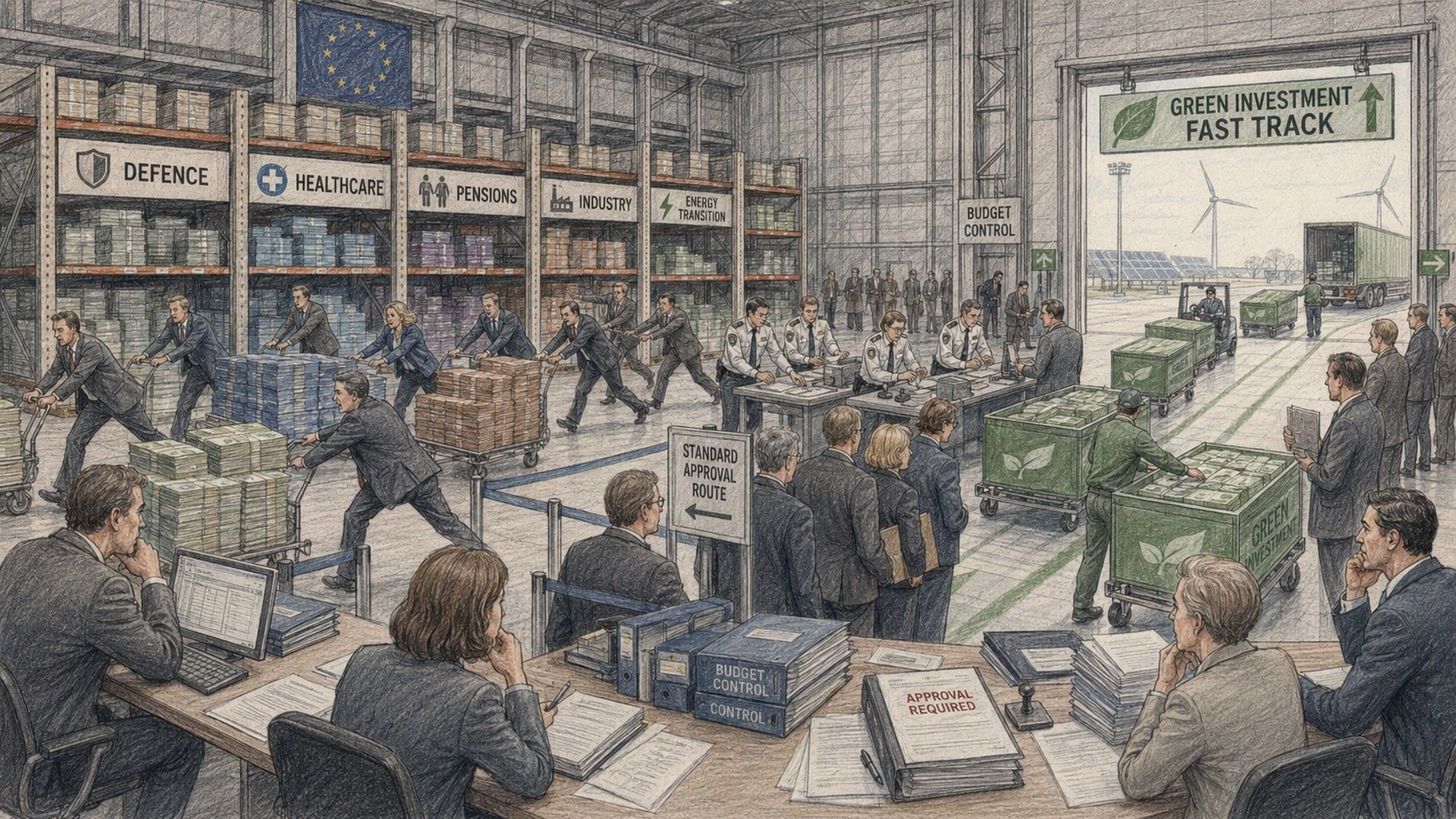
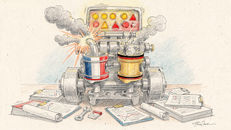
France has told the Commission it is very concerned about exempting green spending from the EU’s budget rules. Estonia, Finland and the Netherlands are also pushing back. That turns a technical waiver into a political warning: even Europe’s pro-climate governments fear Brussels may be opening a dangerous fiscal loophole.
The EU wants more green investment. But its debt rules, national budgets and trust between capitals are starting to crack under the pressure.
Even France is nervous
France is not normally the loudest voice for strict budget discipline. Paris has often pushed for more flexibility, more joint financing and more room for public investment.
That is why its alarm matters.
If even France is worried about a green spending exemption, the proposal has moved beyond a normal north-south budget fight. The concern is that Brussels may be creating a broad escape hatch from fiscal rules just after painstakingly rebuilding them.
The message from Paris is not anti-green. It is anti-chaos.
Brussels wants flexibility fast
The Commission’s idea is built around a real problem. Europe needs huge investment in clean energy, grids, industry, electrification and energy security. The latest energy shock has made that need more urgent, not less.
Exempting some green spending from deficit calculations could help governments move faster without being punished under the EU’s fiscal framework.
On paper, that sounds sensible. In practice, it creates an explosive question: who decides what counts as green, necessary and temporary?
The loophole fear is obvious
Once spending is exempted, every capital has an incentive to stretch the definition.
Grid investment, industrial subsidies, green tax credits, transport projects, energy relief, climate adaptation and national support schemes could all become candidates for special treatment. What begins as targeted flexibility could turn into a political free-for-all.
That is the fear among sceptical countries. Not that green investment is unimportant, but that the waiver could become a budget trick dressed up as climate policy.
Trust is already thin
The fight lands after years of emergency exceptions. Covid, the war in Ukraine, the energy crisis and defence pressures have already battered the old fiscal order.
EU countries were supposed to be moving back towards more credible budget discipline. Instead, the Commission is now considering another special carve-out at the exact moment debt, interest costs and defence bills are rising.
For hawkish capitals, this looks like Brussels weakening its own rules before they have even properly settled.
Green policy meets debt reality
The clash exposes a brutal truth at the heart of Europe’s transition. The EU wants to decarbonise, reindustrialise, protect households, compete with America and China, and rebuild defence all at once.
But national budgets cannot absorb every strategic ambition forever.
Governments are being asked to fund clean energy, subsidise industry, shield voters from high prices and keep debt under control. Something has to give. The waiver fight shows that Europe still has no agreed answer to that problem.
The single market risk returns
There is also a competitiveness danger. Richer countries have more room to exploit fiscal flexibility than weaker ones.
If green spending exemptions allow deeper-pocketed governments to support domestic firms more aggressively, poorer or more indebted member states may be left behind. That would intensify the very fragmentation the EU claims it wants to avoid.
Europe’s green transition could then become another contest between national treasuries rather than a common strategy.
Process is eating credibility
The Commission is trying to respond to a genuine crisis, but the politics look messy. Countries want investment, but fear debt. They want climate action, but dislike loopholes. They want EU coordination, but mistrust Brussels when rules become too elastic.
That is a familiar European pattern: big ambition, weak agreement on who pays, and panic when the bill arrives.
The fiscal waiver may be designed as a shortcut. It risks becoming another argument about whether EU rules mean anything when pressure rises.
The uncomfortable truth: Europe wants investment without the bill
The Politico report captures a sharp shift in the EU’s green debate. The question is no longer whether Europe needs clean investment. It plainly does.
The question is whether Brussels can loosen fiscal rules without destroying trust in the system that holds the eurozone together.
France’s concern is the real warning sign. If even Paris thinks the waiver may go too far, the Commission has a political problem.
Europe’s green transition needs money. But it also needs credibility – and that is now in short supply.