World Center for Strategic Studies
From closed analysis to public debate
- MONTH
- YEAR

Europe’s €7 Trillion Investment Hole: Brussels’ New Budget Barely Makes a Dent
Europe knows it needs a massive investment surge to compete, decarbonise, digitalise and defend itself – but its next budget is nowhere near large enough to deliver it. Bruegel estimates that meeting the EU’s major strategic objectives will require about €7 trillion of additional investment between 2028 and 2034.
The Commission’s proposed €2 trillion long-term budget shifts more money towards strategic priorities and could mobilise significant private capital. Yet even under optimistic assumptions, the paper finds that it would cover only a limited fraction of Europe’s investment needs – leaving the continent dangerously short of the money required to match its ambitions.
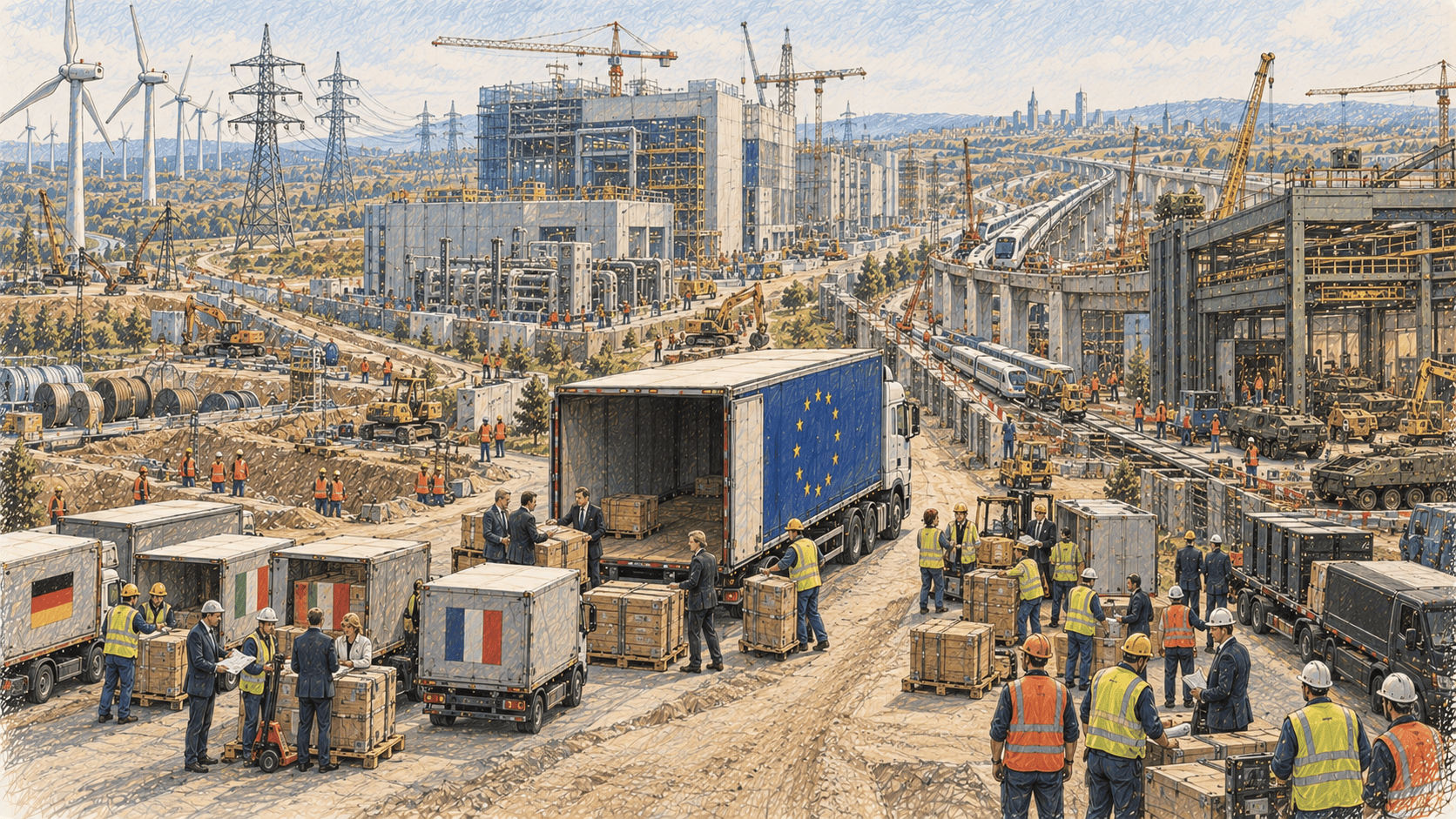
The investment bill is enormous
Bruegel calculates that additional investment needs could average around €1 trillion a year between 2028 and 2034.
The biggest demands come from the green transition, but digitalisation, innovation, defence and other strategic priorities add further pressure.
That is the scale against which the EU’s next Multiannual Financial Framework must be judged – not simply whether its headline number is larger than the previous budget.
Brussels has moved in the right direction
The Commission’s proposal does improve the composition of EU spending.
More resources would be directed towards competitiveness, research, innovation and other strategic investments, while instruments such as the European Competitiveness Fund are designed to concentrate financial firepower.
Bruegel also credits the budget with potentially mobilising substantial private investment through guarantees and financial instruments.
But better targeting cannot compensate fully for insufficient scale.
National governments carry the real burden
The EU budget was never designed to finance Europe’s entire investment transformation.
Most spending will still have to come from national governments and, above all, private companies. Yet many member states face tight fiscal constraints, while private investment will not automatically flow into projects with weak returns, high risks or large public benefits.
That leaves Brussels facing an awkward mismatch: Europe increasingly sets continental strategic objectives while much of the financing remains dependent on national balance sheets.
Defence exposes the gap
Military investment is one of the clearest examples of how quickly Europe’s priorities have expanded.
Governments need to rebuild military capabilities while simultaneously funding energy infrastructure, digital transformation, research and industrial competitiveness.
The new budget provides more support for strategic sectors, but it cannot remotely replace the defence spending required from member states.
Europe is therefore stacking new investment demands on top of old ones without creating equivalent financial capacity at EU level.
Cuts would make a weak answer weaker
The Commission proposal is only the opening bid.
Some fiscally conservative member states want the final budget reduced. Bruegel warns that cuts would further weaken its already limited ability to close Europe’s investment gap.
That creates a familiar EU contradiction: governments demand greater European competitiveness, security and strategic autonomy while resisting the common spending needed to support those objectives.
Private money will not perform miracles
Brussels increasingly hopes public funding can leverage much larger amounts of private capital.
Bruegel sees genuine potential here, but warns against exaggerated expectations. Not every euro of EU expenditure generates several euros of genuinely additional investment, and financial instruments work best for projects capable of producing commercial returns.
Public goods and riskier strategic projects will still require substantial public money.
The reality check: Europe’s ambitions are bigger than its wallet.
The Commission’s proposed budget is better aligned with Europe’s strategic challenges, but Bruegel’s assessment is sobering – even a well-designed €2 trillion framework cannot close an investment gap measured in trillions.
If governments cut the proposal further while refusing other financing solutions, Europe risks repeating its favourite economic mistake: announcing world-class ambitions and funding them on a second-tier scale.