World Center for Strategic Studies
From closed analysis to public debate

- MONTH
- YEAR

Britain’s Global Playbook Is Broken: Brexit and Trump Left London Exposed
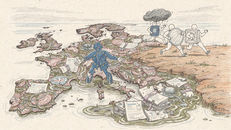
Britain is still behaving like the custodian of an international order that is disappearing beneath its feet. ECFR argues that Brexit, political turmoil and two Trump presidencies have badly weakened the assumptions underpinning British foreign policy, leaving the country more exposed to economic coercion and strategic dependence.
London remains reliant on America for crucial defence and technology while sitting outside the EU bloc capable of giving it greater economic weight. The answer is not retreat, ECFR says, but a harder-headed internationalism – rebuild cooperation with Europe, forge coalitions with middle powers and stop assuming yesterday’s institutions will automatically protect British interests.

Brexit stripped away leverage
Leaving the EU did more than create trade friction. It removed Britain from the political and economic bloc with which its supply chains are most closely integrated.
London is outside EU discussions on trade agreements, defence and economic security at precisely the moment when scale matters more.
In a world where powerful states weaponise markets, technology and supply chains, Britain’s ability to retaliate against coercion is simply weaker on its own.
America is no longer the safe bet
Britain’s other traditional anchor has become less dependable.
The US remains essential for intelligence, trade, technology and defence, but ECFR warns that Washington itself can now become a source of economic pressure.
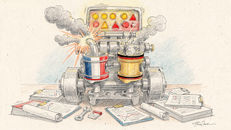
The vulnerability runs deep. Britain relies on American support for elements of its nuclear deterrent and platforms including F-35 fighters, Apache helicopters and C-17 transports. Yet the paper argues that London has done too little planning for alternatives even as Russian threats intensify and US policy becomes less predictable.
Britain sold away tech power
AI exposes another uncomfortable dependency.
ECFR argues that Britain allowed some of its most promising technology companies to be acquired by US firms, weakening its control over a sector likely to become central to national power.
Britain cannot realistically build complete technological independence alone. It lacks the market size and financial scale needed to compete with the biggest powers across every critical technology.
Europe therefore becomes part of the solution whether Brexit politics likes it or not.
The EU offers the missing muscle
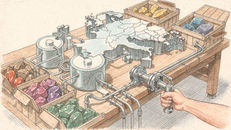
ECFR wants much deeper UK-EU cooperation on economic security, joint procurement, trade defence, critical supply chains, payments and technology.
Together, Britain and the EU possess far greater market power, capital, talent and industrial capacity than Britain can deploy independently.
The irony is stark: Brexit was sold partly as a route to greater national control, yet geopolitical fragmentation makes European scale increasingly valuable for protecting that control against pressure from Washington and Beijing.
London needs partners beyond the West
Reconnecting with Europe is only the first layer.
ECFR proposes a second circle of cooperation with influential middle and emerging powers that increasingly refuse to align permanently with either the West or China.
Britain should build practical coalitions around climate, technology, finance, supply chains and other shared interests rather than demanding broad geopolitical loyalty.
That means competing for partnerships instead of assuming British diplomatic history automatically delivers influence.
Old institutions cannot carry Britain
The UN, World Bank, IMF and other multilateral institutions still matter, but ECFR argues that defending them for their own sake is no longer a credible foreign-policy strategy.
Britain should preserve institutions that work while creating more flexible coalitions where existing machinery is paralysed.
That shift also matters domestically. Public confidence in British foreign policy has weakened, and international cooperation needs to demonstrate concrete benefits for security, jobs and prosperity rather than being presented as an abstract defence of the rules-based order.
What this reveals: Britain cannot live off yesterday’s influence
The country still possesses formidable assets – diplomatic reach, finance, science, technology, military capabilities and membership of major international bodies. But those advantages are being diluted by dependence and geopolitical fragmentation.
ECFR’s warning is that restoring the old order is no longer an option. Britain must build influence differently – and closer cooperation with Europe may now be essential to recovering some of the leverage Brexit surrendered.