World Center for Strategic Studies
From closed analysis to public debate
- MONTH
- YEAR

Europe’s Canada Pivot: Brussels Is Looking for Insurance Against Washington
Europe is quietly building a new layer of strategic insurance – and Canada is moving closer to the centre of it. GMF argues that the EU-Canada relationship is becoming more important as Washington grows less predictable, transatlantic trade tensions rise and Europeans search for reliable partners beyond the traditional US-led framework.
Ottawa offers an unusually attractive combination: NATO membership, democratic alignment, critical resources, defence links and an existing trade agreement with the EU. But the manoeuvre also exposes Europe’s underlying weakness – Brussels is diversifying relationships because dependence on the United States increasingly looks like a strategic risk.
Washington changes the calculation
The EU’s closer relationship with Canada cannot be separated from uncertainty surrounding the United States.
Europe still depends heavily on Washington for security, technology and economic ties. But US pressure on allies and growing unpredictability have made diversification more urgent.
Canada faces a similar problem. Its economy is deeply tied to the US, leaving Ottawa vulnerable when Washington turns tariffs and market access into political leverage.
That gives both sides a powerful reason to look across the Atlantic at each other.
CETA suddenly looks more valuable
The EU and Canada already possess something many potential partners lack – a functioning framework for deep economic cooperation.
CETA has reduced trade barriers and created institutional channels that can now support a broader strategic relationship.
What once looked mainly like a trade agreement increasingly resembles geopolitical infrastructure. In a world of tariffs, coercion and fragmented supply chains, trusted market access has become a security asset.
Defence moves onto the agenda
The relationship is also expanding beyond commerce.
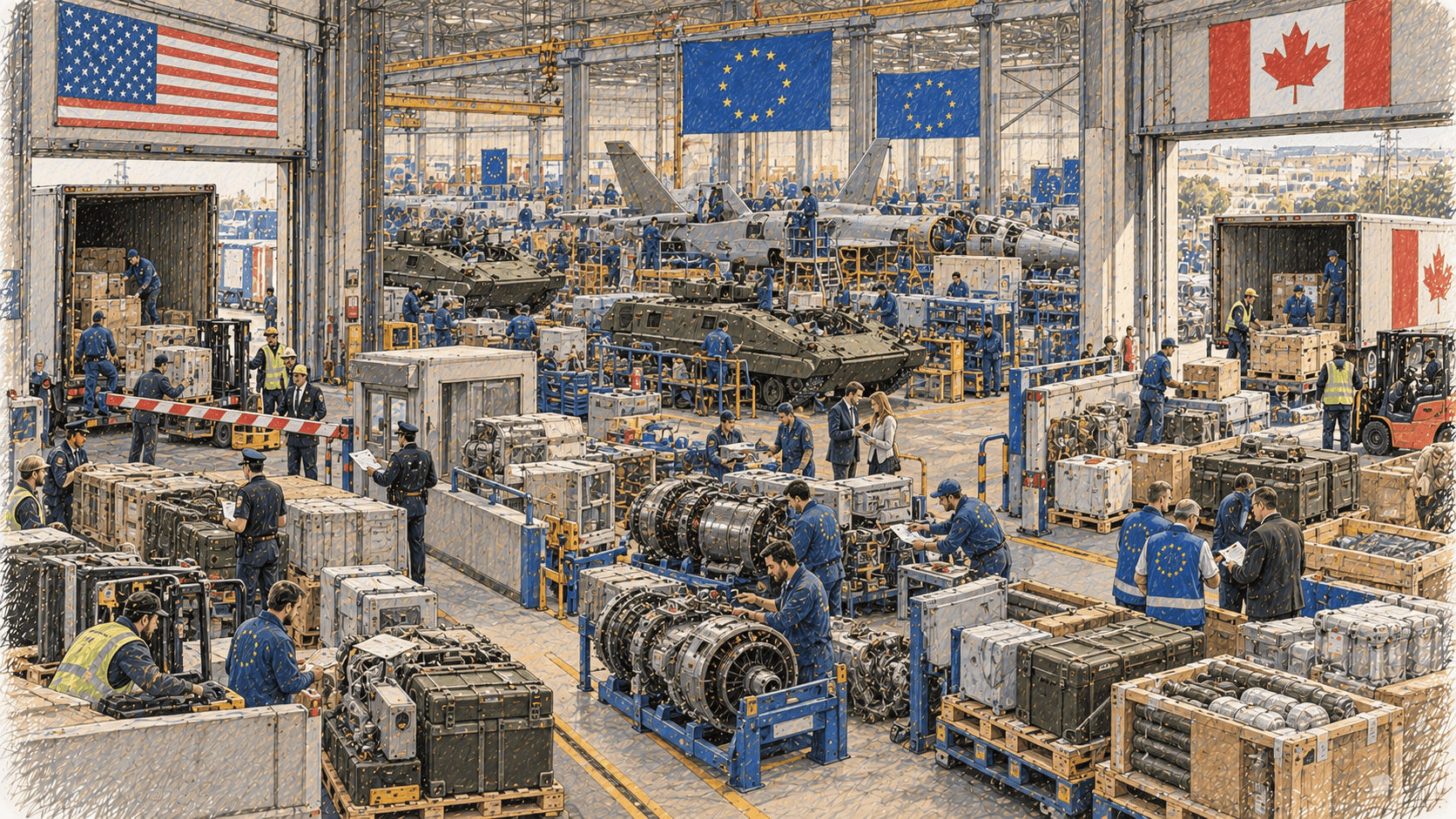
Canada and Europe share NATO commitments and concerns over Russia, while European rearmament is creating new opportunities for industrial cooperation.
Closer Canadian involvement in European defence initiatives could diversify procurement, strengthen production capacity and give both sides alternatives to excessive dependence on US suppliers.
For Europe, every additional credible defence partner adds another option at a moment when strategic flexibility is badly needed.
Canada brings resources Europe needs
Critical minerals give Ottawa another card.
Europe’s energy transition, defence industry and technology sectors require secure supplies of raw materials, while dependence on China remains a major vulnerability.
Canada possesses substantial reserves and operates within a political and regulatory environment Europeans consider far more dependable.
That makes closer integration of Canadian and European supply chains attractive – but developing mines, processing capacity and infrastructure will require years of investment rather than diplomatic declarations.
Brussels wants a wider network
GMF places the Canadian relationship inside a larger European strategy.
The EU is trying to strengthen links with reliable middle powers as competition between the US and China makes dependence on either increasingly uncomfortable. Canada can become part of a network connecting Europe with partners capable of cooperating on trade, security, technology and economic resilience.
This is not an attempt to replace America. It is an attempt to ensure that America is not Europe’s only serious option.
Diversification will not erase dependence
The limits remain obvious.
Canada cannot replace US military capabilities, its market is far smaller than America’s and its own economy remains extraordinarily dependent on its southern neighbour.
Closer EU-Canada cooperation therefore reduces risk at the margins rather than creating genuine strategic independence.
The stark truth: Europe is shopping for strategic backup
Canada is an unusually natural partner, and the existing economic relationship gives Brussels something solid to build upon.
But the very urgency of the rapprochement tells its own story – Europe is strengthening alternative partnerships because relying overwhelmingly on Washington no longer feels as safe as it once did.