World Center for Strategic Studies
From closed analysis to public debate

- MONTH
- YEAR

Europe’s Defence Gamble: Big Military Plans, Tiny Budgets and Too Many Players
Europe is launching another ambitious defence initiative, but the risk is that bureaucracy and national rivalries will once again overwhelm military results. The EU’s first five European Defence Projects of Common Interest (EDPCIs), approved in September 2026, promise to tackle critical capability gaps and strengthen Europe's ability to defend itself. Yet an EUISS commentary by Luigi Scazzieri warns that the projects are dangerously broad, involve too many countries and lack serious financial backing. With American military support increasingly uncertain, Europe cannot afford another round of defence cooperation that produces meetings and frameworks instead of operational capabilities.
Five projects, enormous ambitions
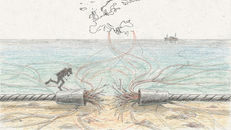
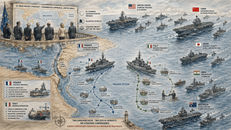
The new initiatives cover drones and counter-drone systems, maritime and seabed defence, space capabilities, integrated air and missile defence, and protection of NATO's eastern flank.
These are precisely the areas where European military weaknesses are becoming harder to ignore.
But the projects are so expansive that some resemble entire defence programmes rather than clearly defined initiatives. Eastern Flank Watch alone covers six pillars, including ground combat, air defence, drones, intelligence and communications.
Such ambition risks diluting priorities and making tangible progress harder to achieve.
Too many governments, too little agreement
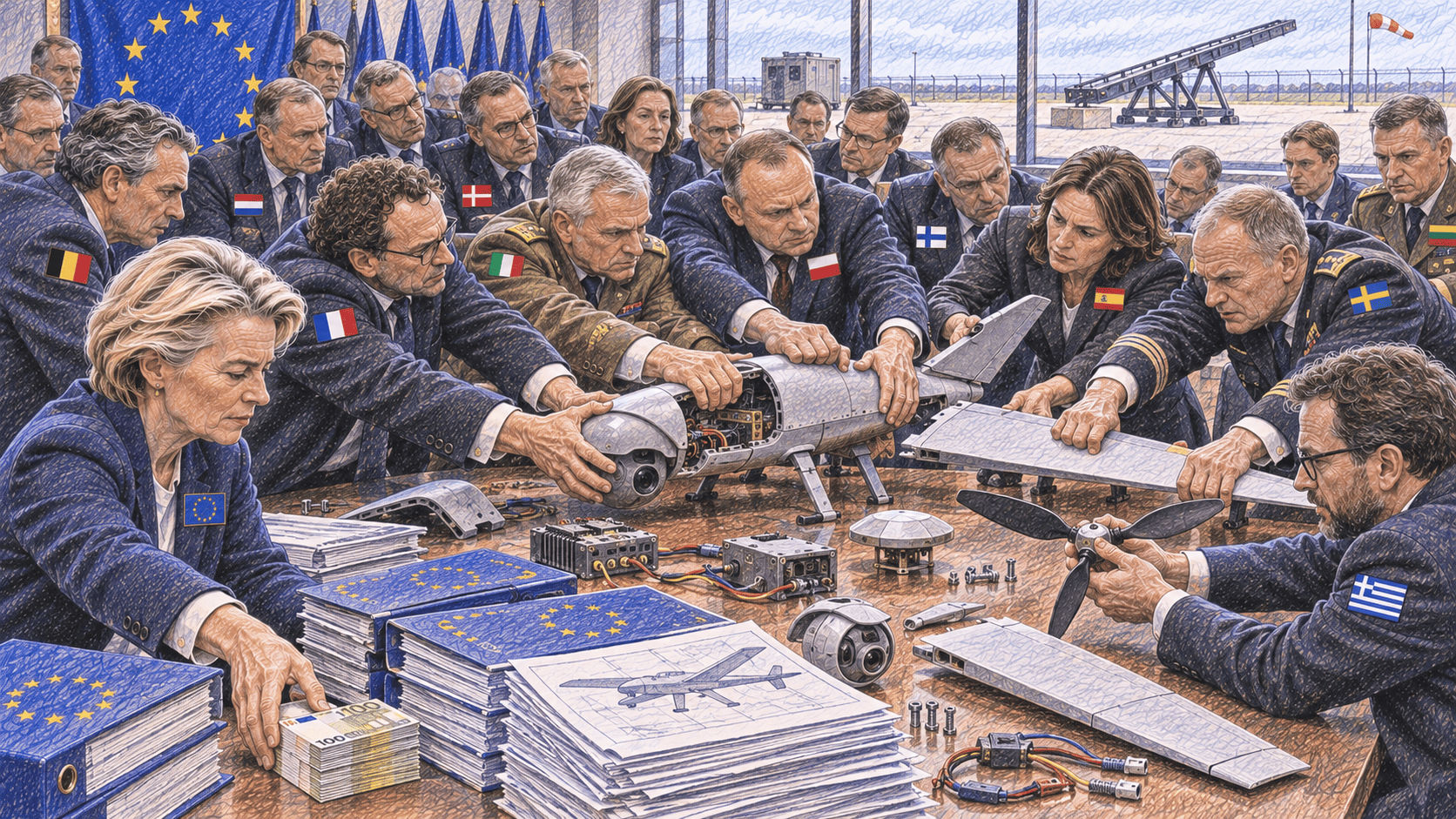
Each EDPCI involves between 17 and 28 countries. Broad participation could mobilise resources and generate economies of scale, but it also creates serious coordination problems.
Governments must agree on military requirements, procurement schedules and industrial responsibilities, often while defending competing national interests.
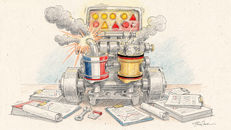
Previous European defence cooperation, including PESCO, has already demonstrated the danger: large coalitions can become bogged down in negotiations without delivering capabilities quickly enough.
Brussels risks repeating the same mistakes under a new label.
The €325 million funding problem
The European Commission has allocated just €325 million to support EDPCIs through the European Defence Industry Programme.
For initiatives covering some of Europe's most expensive and technologically demanding military requirements, this provides little incentive for governments to transfer existing projects into the new EU framework.
The problem is not simply insufficient money. Without substantial financial incentives, national governments may see little reason to surrender control or accept additional administrative complications.
A meaningful funding commitment in the next EU budget will be a decisive test of Brussels' seriousness.
National projects threaten another layer of duplication
Europe is hardly starting from scratch. NATO already coordinates integrated air and missile defence, while Germany leads the European Sky Shield Initiative.
Poland is developing East Shield, Baltic countries are building their own defensive infrastructure, and Germany plans to invest €35 billion in military space capabilities.
EDPCIs could help connect these efforts. But they could also create another organisational layer, adding complexity to programmes that already have their own participants, priorities and timelines.
The danger is that Europe spends more time coordinating defence initiatives than delivering the equipment its armed forces need.
Washington's shadow exposes the real weakness
Europe's growing uncertainty about American support makes independent military capabilities increasingly urgent.
Space is a particularly revealing vulnerability. European governments have struggled to compensate for interruptions in US support to Ukraine, exposing their dependence on American capabilities.
The commentary identifies space as an especially strong candidate for concentrated EU investment.
Yet European autonomy cannot come at the expense of NATO interoperability. Defence systems that cannot communicate or operate effectively with allied capabilities would create new weaknesses rather than eliminate existing ones.
EU rules could shut out useful partners
The EDPCI funding framework restricts meaningful participation by non-EU partners, with Norway and Ukraine enjoying greater access than other countries.
This could prevent European projects from benefiting fully from external industrial expertise, technology and financing.
Scazzieri argues that cooperation should remain open to partners willing to agree on funding, intellectual property and export conditions.
Building stronger European defence capabilities should not mean unnecessarily excluding countries that could help deliver them.
The verdict: Europe's defence ambitions need weapons, not paperwork
The EU's new projects could become valuable instruments for strengthening military capabilities, but only if Brussels abandons the temptation to make every initiative an oversized multinational exercise.
The commentary calls for substantial funding, common technical standards and smaller groups of committed countries to deliver specific projects. Broad cooperation should ensure interoperability, while practical development and procurement should be driven by governments ready to act.
Europe faces a simple strategic test. If EDPCIs become another collection of underfunded, overcomplicated programmes, the EU will remain vulnerable despite its expanding defence ambitions.
The continent needs military capabilities that work together – and arrive before the next crisis.