World Center for Strategic Studies
From closed analysis to public debate
- MONTH
- YEAR

Brexit Has Left Britain and Europe Exposed to Economic Pressure – And Neither Can Fix It Alone
Britain and the European Union remain deeply economically connected, yet they lack the mechanisms needed to confront growing threats from China, American trade pressure and vulnerable global supply chains. In a Chatham House commentary published on 16 November 2026, Jerome Puri argues that the UK–EU summit on 20 November must move beyond repairing post-Brexit trade relations. His central proposal is a formal economic security partnership that would allow London and Brussels to share intelligence on dangerous investments, coordinate responses to coercion and protect strategically important industries. Without closer cooperation, both sides risk confronting economic threats separately despite sharing many of the same vulnerabilities.
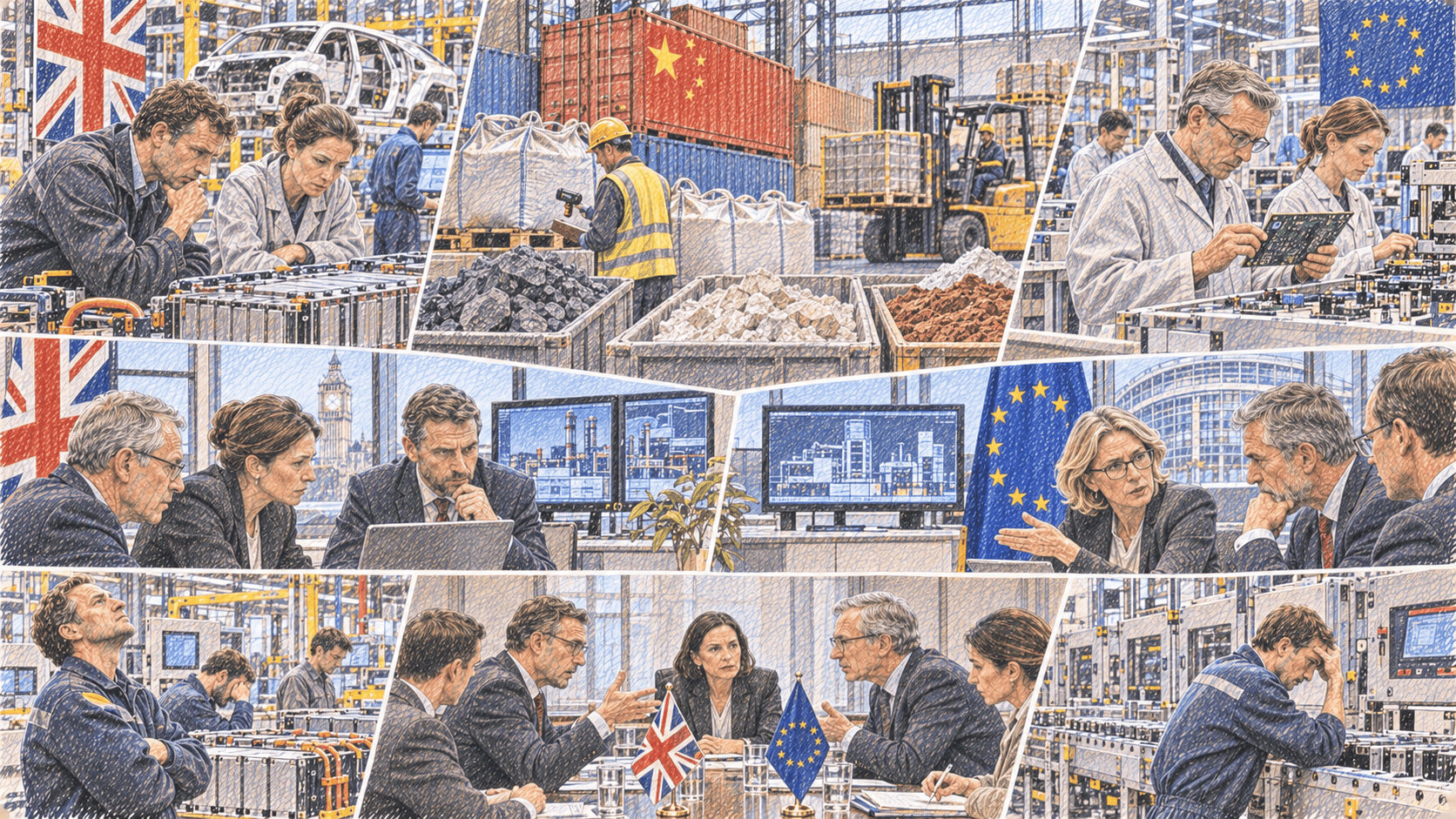
Brexit has created a strategic gap
The UK and EU are negotiating agreements to reduce trade barriers, including agricultural checks, youth mobility arrangements and emissions trading.
These measures could improve economic relations, but Puri argues that they do not address the changing international environment.
China is restricting exports of critical materials, while Washington increasingly uses tariffs as instruments of political pressure.
Britain and the EU face similar risks, yet their economic security policies remain insufficiently coordinated.
Europe's industrial protectionism creates another problem
The EU's proposed Made in Europe initiatives would favour European-produced goods in public procurement and subsidy programmes.
For Britain, exclusion from these arrangements could disrupt established industrial supply chains and weaken access to European markets.
But Brussels is reluctant to extend preferential treatment without reciprocal commitments, particularly concerning tariffs and investment restrictions involving China.
London, meanwhile, wants to preserve its independent trade policy.
The dispute illustrates how Brexit complicates cooperation even when both sides have strong common interests.
Britain and Brussels are sharing too little intelligence
Puri identifies investment screening as the most practical starting point for a new partnership.
Both sides need better information about foreign acquisitions of sensitive companies, access to advanced technologies and vulnerabilities in critical supply chains.
Britain already operates a developed investment-screening system under its National Security and Investment Act.
The author proposes connecting the UK's Investment Security Unit with EU national screening authorities.
Such cooperation could help identify high-risk investments, including those involving Chinese companies, before they create strategic vulnerabilities.
Economic coercion requires a common response
The EU has developed an Anti-Coercion Instrument designed to deter and respond to economic pressure from foreign governments.
Britain remains outside this framework and is developing its own approach.
Puri argues that the two sides should establish procedures for consultation when either faces retaliation linked to coordinated economic policies.
For example, if London aligned with EU restrictions on Chinese goods or investment, it could face countermeasures from Beijing.
A partnership would provide a mechanism for discussing such consequences rather than leaving Britain to manage them independently.
Supply-chain disruption demands earlier warnings
The commentary also proposes a joint early-warning system for disruptions affecting strategically important goods.
This would connect Britain's Supply Chain Centre with European monitoring arrangements.
The objective would be to identify emerging shortages, share assessments and coordinate responses before disruptions become severe.
Puri points to cooperation between the United States, Japan and South Korea as a possible model.
Such a system would be particularly relevant for critical minerals, energy supplies and advanced technologies.
Political disagreements cannot be ignored
A comprehensive economic security agreement would face significant obstacles.
Britain and EU member states compete for industrial investment, while their approaches to China do not always coincide.
Brussels wants reciprocal access and policy alignment before extending industrial benefits.
London is wary of accepting European rules without participating in their formulation.
Puri therefore recommends beginning with information-sharing rather than attempting immediate agreement on tariffs, subsidies or industrial policy.
Practical cooperation could establish the confidence needed for more difficult negotiations.
The reality check: Brexit cannot separate Britain's economic security from Europe's
Chatham House's central argument is that the UK and EU should treat economic security as a permanent component of their relationship, not an occasional subject for diplomatic consultations.
An annual ministerial dialogue, investment-screening cooperation and shared supply-chain monitoring could provide the foundations for deeper coordination.
Over time, the partnership could expand into responses to economic coercion and strategic industrial investment.
The challenge is political rather than geographical: Britain and Europe remain closely connected through markets, technology and supply chains, but their institutions have not yet adapted to the economic threats they increasingly face together.