
World Center for Strategic Studies
From closed analysis to public debate
POPULAR
- MONTH
- YEAR

Merz’s Rough Diplomacy: Germany’s Foreign Policy Gets Messy

The commentary takes aim at Friedrich Merz’s recent foreign policy moves and finds a style that looks improvised, abrasive and politically risky. What is presented as tough realism comes across as clumsy “dirty work” that raises eyebrows at home and abroad. The piece argues that Germany is projecting firmness without coherence, and paying the price in credibility.
Germany’s Foreign Policy Creed: Fine Words, Fading Power

The analysis takes a close look at the principles guiding German foreign policy and exposes a widening gap between aspiration and impact. Berlin speaks the language of responsibility, multilateralism and restraint. The problem, the piece argues, is that these principles increasingly look like comfort blankets in a world that rewards speed, leverage and hard choices. What once sounded virtuous now risks sounding evasive.
EU Trade Fiasco: How Brussels Lost Control of the Response
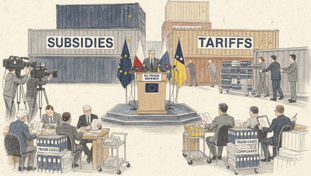
The analysis tears into the EU’s handling of trade policy and finds a familiar pattern of overconfidence followed by underdelivery. Faced with a tougher global trade environment, Brussels talked up strategic autonomy and defensive tools. What it delivered instead was delay, confusion and diluted action. The piece argues that Europe did not just struggle to respond – it actively mishandled the moment.
Geopolitical EU Meets Trump 2.0: Storm Warnings After 100 Days
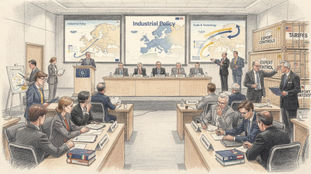
The analysis takes stock of Europe’s position one hundred days into Donald Trump’s return to the White House and finds a Union talking geopolitics while bracing for turbulence it cannot control. The EU wants to act like a strategic power, but Trump’s early moves expose how thin that ambition still is. The piece argues that Europe is navigating the storm with limited instruments, fragile unity and heavy dependence on decisions made in Washington.
Europe and China: Caught Between Dependence and Denial

The analysis delivers a blunt assessment of Europe’s China policy and finds a continent stuck in the middle with shrinking room to manoeuvre. Brussels talks about de-risking, resilience and strategic realism. In practice, Europe remains deeply entangled with China economically while lacking the power or unity to shape the relationship on its own terms. The paper argues that Europe is trying to manage a rivalry it did not choose, with tools that are not strong enough.
America’s Hemisphere First: Europe on the Back Foot After Trump’s Venezuela Strike
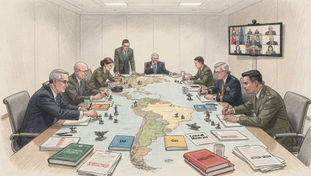
The commentary delivers a stark wake-up call to Europe after Donald Trump’s military strike and capture of Venezuela’s president. What should have been a distant regional event has immediate geopolitical recoil for the EU. The piece argues that Europe’s policymakers face a harsher world order where the US prioritises its own strategic agenda, ignores international norms and uses force with growing ease.
Democracy in Europe: Shielding the System or Rewriting It

The analysis takes aim at Europe’s growing unease with its own democratic model and asks an uncomfortable question – is the EU trying to protect democracy, or quietly reinvent it to survive political stress. The piece argues that Europe is no longer confident that existing democratic rules can cope with polarisation, populism and external pressure. The response is not renewal through trust, but tighter control through redesign.