World Center for Strategic Studies
From closed analysis to public debate

- MONTH
- YEAR

Europe’s Airpower Trap: Too Many Jets, Too Few Weapons
Europe’s air forces are chasing drones while the real shortage sits under their wings. The RUSI commentary argues that NATO’s European members do not first need a new fantasy fleet of uncrewed aircraft. They need missiles and bombs – quickly, in depth and in the right types.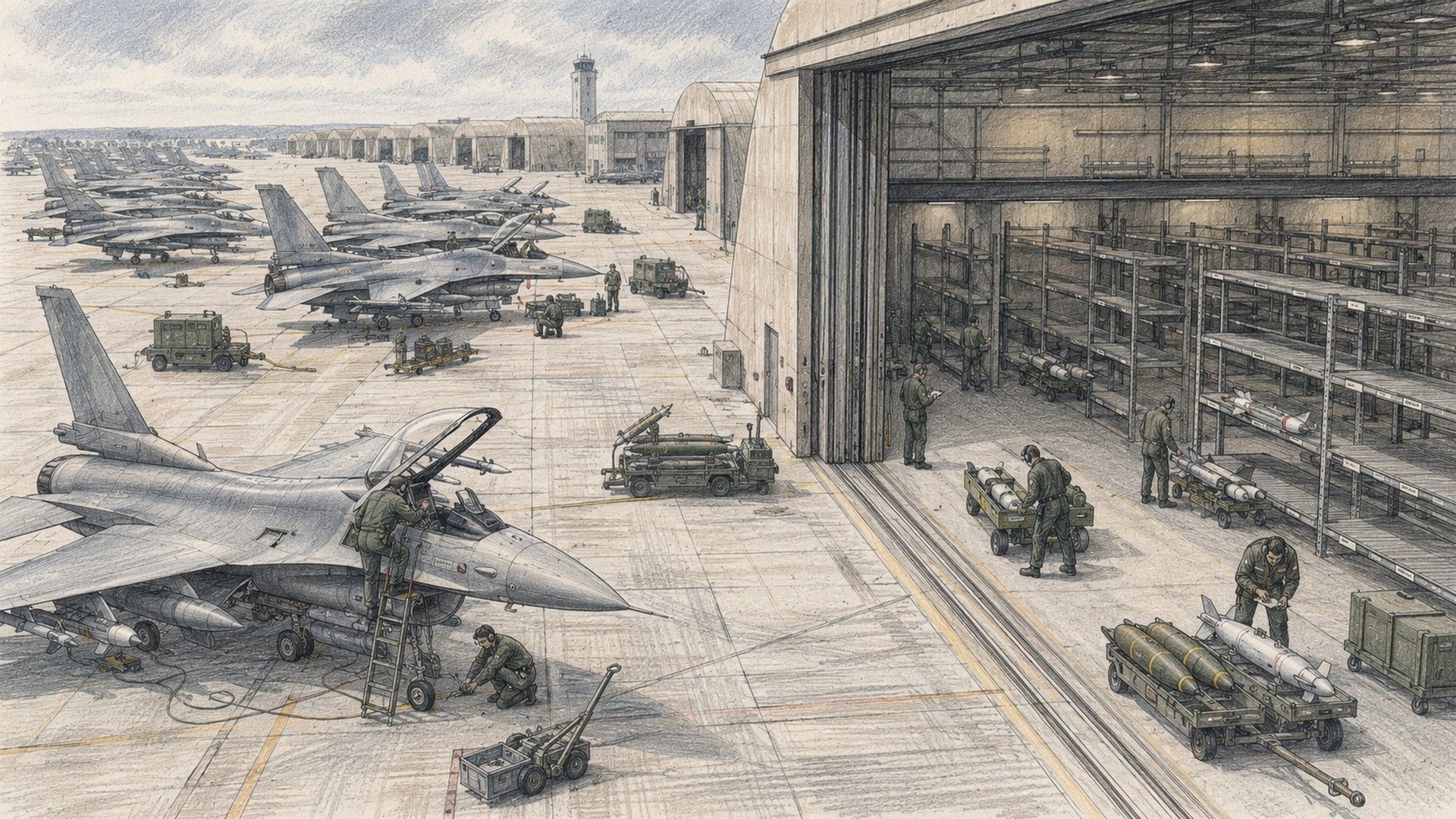
The warning is sharp. Britain and Europe already own large numbers of capable fourth- and fifth-generation combat aircraft. The embarrassing weakness is that many of those aircraft lack enough suitable stand-off weapons to fight through serious Russian air defences.
This is not a technology glamour problem. It is a munitions stockpile problem – and Europe has let it fester for years.
Britain bought the jet, not the punch
The UK’s F-35B force operates one of the most advanced strike fighters in the world, but until now it has lacked a proper weapon for heavily defended targets.
RUSI welcomes Britain’s move to buy the US-made GBU-53/B Small Diameter Bomb II because it finally gives the F-35B a useful strike option against serious air defence threats. The current Paveway IV is accurate, but too short-ranged for the toughest missions.
That is the grim absurdity. Britain bought a stealth fighter designed for the most dangerous battles, then left it for years without the right weapon to fight them.
A decade wasted
The delay is ugly because the need was obvious from the start. The UK’s F-35Bs arrived at RAF Marham in 2018. Yet a suitable strike weapon has taken the better part of a decade to approve.
The planned SPEAR 3 missile was meant to solve the problem, but it is years behind schedule and now unlikely to enter service until at least the early 2030s.
The GBU-53/B is therefore not a perfect answer. It is a stopgap. But it is a sensible stopgap because it is available, cleared for F-35 use and capable of giving each aircraft far more practical combat power.
Cheap mass is not so cheap
The commentary pushes back hard against the fashionable idea that drones can cheaply solve Europe’s combat-mass problem.
Ukraine and Russia launch waves of hundreds of one-way attack drones, but most are shot down. Only a small fraction reach targets, and fewer still cause serious military damage. Such attacks can still cost tens of millions of dollars per wave, require major logistics support and demand large launch crews, mission planning and protection.
For NATO, with Western labour costs, procurement systems and support standards, copying that model would not be the bargain many imagine.
Drones are not magic. They are another expensive military ecosystem.
Europe already has the launch platforms
RUSI’s blunt point is that Europe is not primarily short of aircraft.
European NATO air forces collectively field more than a thousand advanced modern fighters. Their sensors, training and doctrine are generally strong enough to challenge Russian airpower and ground-based air defences.
The weakness is what those jets can actually fire, how many weapons are available and whether those weapons can hit the targets that matter from survivable ranges.
Buying more platforms while leaving existing aircraft under-armed is strategic theatre.
The Russia test would be brutal
In a NATO self-defence scenario against Russia, Europe would not run out of pilots or aircraft first. It would run out of the right munitions.
Long-range cruise missiles such as Storm Shadow are scarce and mainly suited for fixed high-value targets. Other weapons are too short-ranged for survivable use against modern air defences. Stocks of key air-to-air and air-to-ground weapons are limited.
That means Europe could enter a major conflict with impressive aircraft fleets that burn through their useful weapons terrifyingly fast.
The hangars would still look strong. The arsenals would not.
Prestige projects could make it worse
Collaborative combat aircraft, uncrewed combat aircraft and drone swarms may matter in future. But RUSI warns they will not fix the immediate combat-mass gap if they drain money from weapons that can arm today’s jets.
Uncrewed systems still need sensors, doctrine, logistics, command networks and their own munitions stockpiles. They are not a shortcut around the hard work of buying enough weapons.
The fastest way to increase combat power is less glamorous: order missiles and bombs for the aircraft Europe already has.
The hard lesson: Airpower without munitions is theatre
The RUSI assessment is a direct challenge to Europe’s defence debate. Politicians love talking about drones, future systems and innovation. But deterrence depends on what can be fired in the next war, not what looks exciting in a strategy document.
Europe has capable aircraft. It has skilled pilots. It has NATO doctrine. What it lacks is depth in the weapons that would matter most against Russia.
That is fixable – but only if governments stop confusing platforms with power.
The aircraft are already there. The bombs are not.