
World Center for Strategic Studies
From closed analysis to public debate

- MONTH
- YEAR

Europe’s Far Right Is Reshaping the Political Agenda – And the Centre Right Is Losing Control
Europe’s far-right parties remain divided over Russia, economic policy and relations with one another, but their influence is extending well beyond their electoral strength. In an ECFR commentary published on 4 November 2026, Mark Leonard argues that nationalist and populist movements are converging around three objectives: dismantling political barriers separating them from mainstream parties, expanding immigration enforcement into large-scale deportation policies, and fundamentally renegotiating the European Union. His central warning is that established parties are increasingly adopting the far right’s political agenda rather than successfully moderating it. The consequences could extend from domestic politics to European integration, Ukraine policy and the continent’s international position.
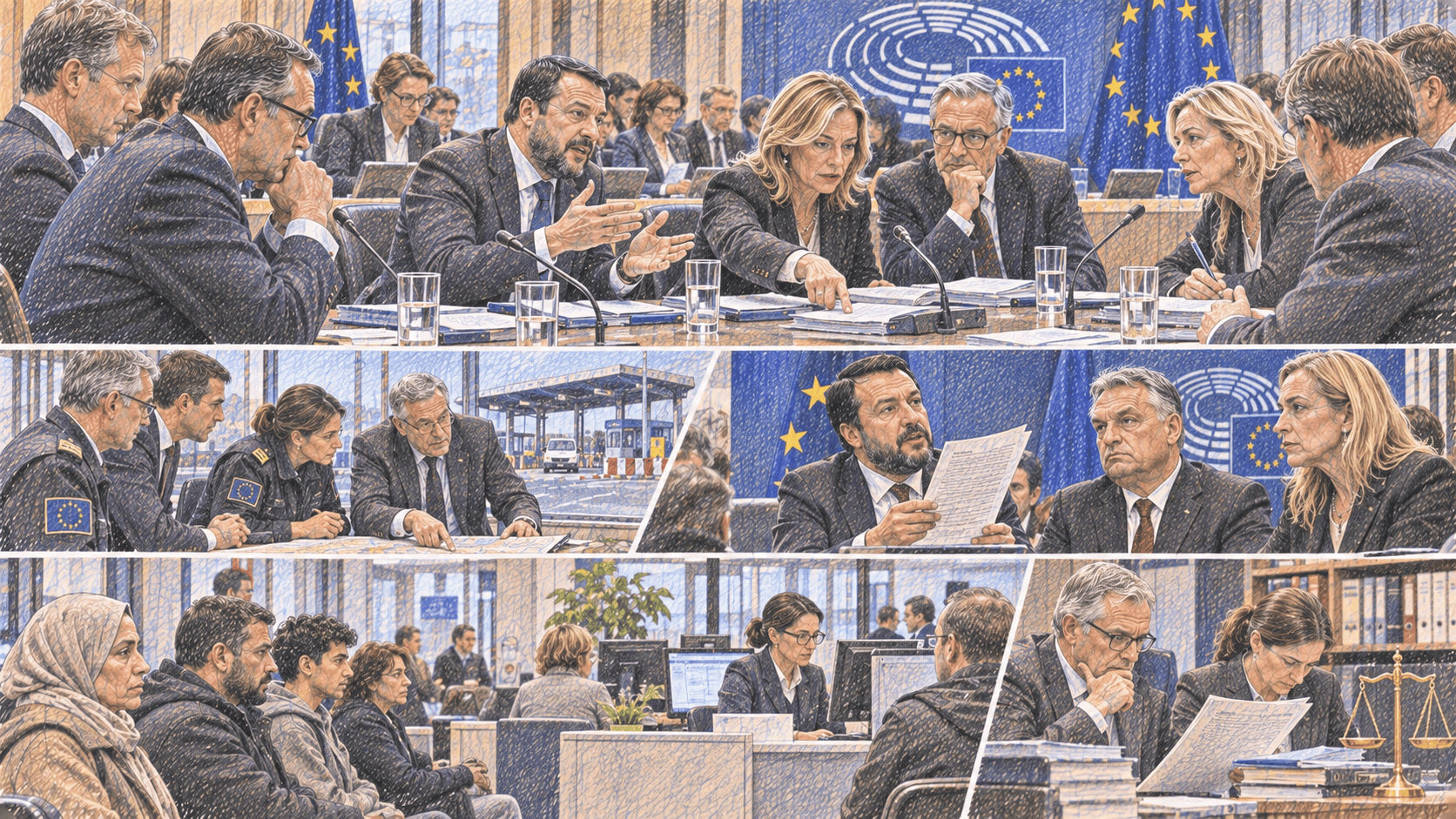
The centre right is losing control of the political firewall
Leonard identifies the dismantling of the political cordon sanitaire as the first major objective.
Giorgia Meloni’s Brothers of Italy provides a model for gaining institutional acceptance and building alliances with established conservatives.
At European level, the European Conservatives and Reformists could become a bridge between nationalist parties and the centre-right European People’s Party.
Leonard challenges the assumption that bringing radical-right parties into government necessarily moderates them. He argues that the reverse may occur: mainstream conservatives increasingly adjust their positions to accommodate nationalist demands.
Migration policy is moving towards deportation
The second objective goes beyond reducing new arrivals.
Leonard cites AfD strategist Benedikt Kaiser, who argues that border enforcement does not address concerns about immigrants already living in European societies.
The policies discussed include removing undocumented migrants, foreign nationals with criminal convictions and some people whose asylum protections could be reconsidered.
Reform UK has also proposed a large-scale deportation programme.
Leonard warns that the concept of remigration could increasingly enter mainstream political debate as established parties respond to electoral pressure.
The far right wants to remake the EU, not abandon it
The third objective concerns European integration.
After Brexit, many nationalist parties have moved away from advocating outright EU withdrawal.
Instead, they increasingly propose reducing the Union’s responsibilities, expanding national exemptions and challenging common policies.
Marine Le Pen has proposed a referendum on reducing France’s net EU budget contribution.
A leaked AfD proposal envisages limiting the EU to a narrower set of core responsibilities, with extensive German exemptions covering migration, foreign policy, defence and financial transfers.
Leonard argues that such changes could substantially alter the Union while preserving its formal existence.
Ukraine, climate policy and individual rights face uncertainty
The proposed transformation could affect several major European policy commitments.
Leonard suggests that support for Ukraine, the green transition and the protection of individual rights could become subjects of renewed negotiation.
These issues would be influenced by parties that share an emphasis on national sovereignty but disagree on important geopolitical questions.
The resulting challenge would be institutional as well as political: common European commitments could become harder to maintain if governments demanded increasingly extensive national exceptions.
Nationalist parties remain divided
Leonard stresses that Europe's far right is not a unified political movement.
Marine Le Pen and Jordan Bardella are wary of association with Germany’s AfD, while figures within Meloni’s government have expressed concern about the consequences of a Le Pen presidency for the EU and NATO.
The parties also disagree over Russia, Israel, economic policy and welfare.
Nevertheless, Leonard argues that these divisions do not prevent them from influencing the broader political agenda.
Their shared emphasis on sovereignty, immigration and resistance to established institutions provides common ground despite substantial differences elsewhere.
Mainstream parties face a difficult response
Leonard concludes that established parties cannot rely solely on defending existing institutions or portraying nationalist alternatives as unacceptable.
He argues that they need their own convincing programme for restoring citizens’ control over economic and political decisions.
Such an approach would emphasise European sovereignty and security rather than simply defending further liberalisation and globalisation.
It could also expose tensions within nationalist parties over Europe's dependence on external powers, including the United States, Russia and China.
The uncomfortable truth: Political influence extends far beyond election results
Leonard's central argument is that the far right has already changed the terms of European political competition, regardless of which parties ultimately win forthcoming elections.
Its ideas increasingly shape debates over migration, national sovereignty and the future of EU institutions.
The decisive question is whether mainstream parties can develop a credible alternative or continue responding to an agenda increasingly defined by their nationalist competitors.
For the European Union, the stakes extend beyond individual governments. The debate concerns whether integration will remain a foundation for collective European action or give way to a looser system of national exemptions and competing political priorities.