
World Center for Strategic Studies
From closed analysis to public debate
- MONTH
- YEAR

Europe’s Budget Battle: Brussels Struggles to Protect Democracy Without Punishing Citizens
The EU wants its next long-term budget to do more than finance programmes – it also wants to defend democracy and the rule of law. But the Centre for European Reform raises a difficult question: can Brussels use financial pressure to confront governments that undermine democratic institutions without hurting the citizens it claims to protect? The stakes are high. EU funding is one of Brussels’ strongest sources of leverage, yet withholding money can damage public services, local communities and independent organisations. Europe’s challenge is to make budgetary pressure effective against governments while keeping support flowing to the people and institutions that need it.
Brussels has frozen billions – but the system still bends
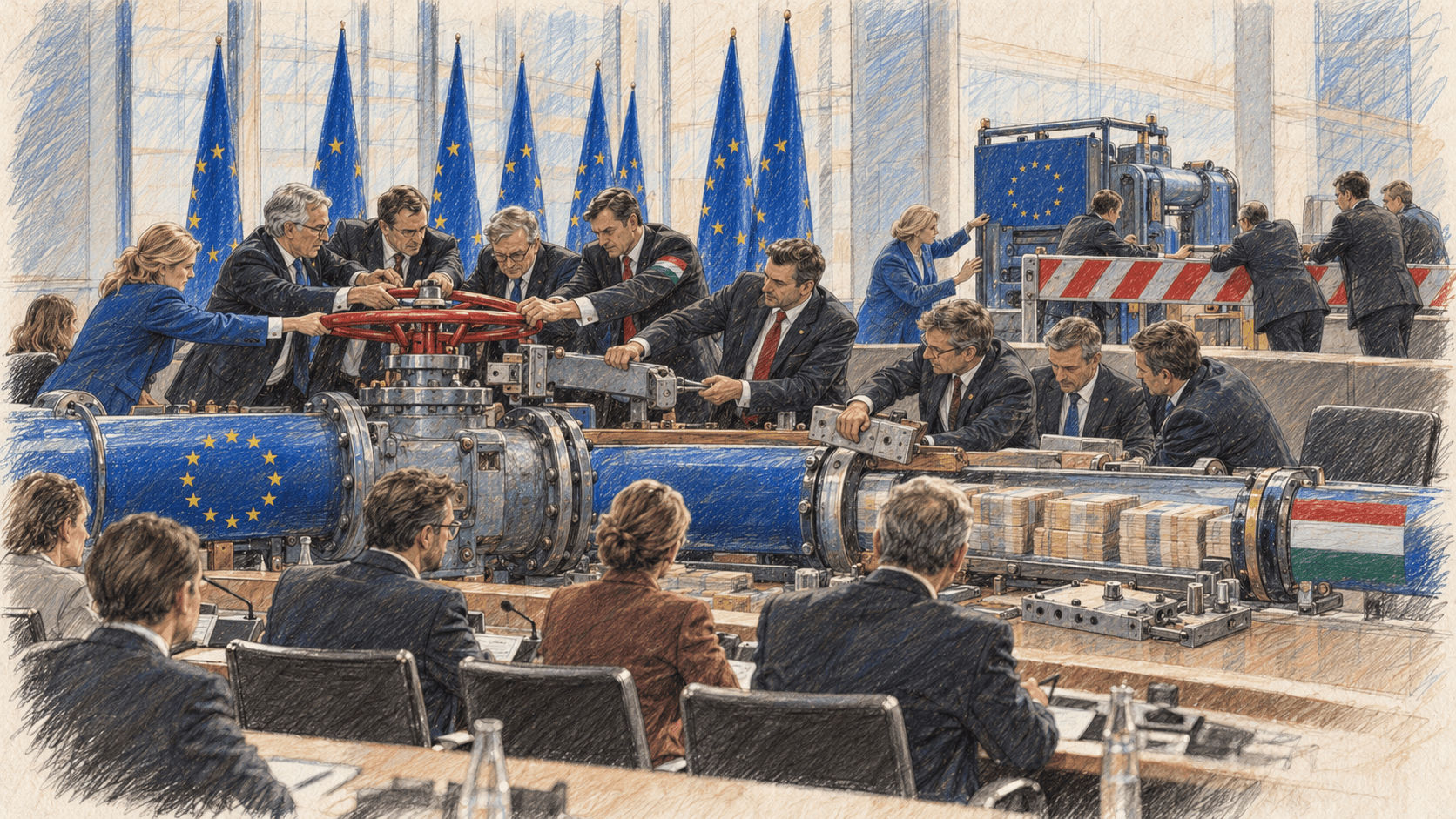
The EU has already tested financial pressure against Hungary and Poland, with substantial results.
At their peak, roughly €32 billion in EU funds were frozen for Hungary and €136 billion for Poland. Yet the mechanism specifically designed to punish rule-of-law breaches accounted for only €6.3 billion of Hungary's suspended funding and was never triggered against Poland.
The bigger freezes came through instruments giving the European Commission more direct control. CER identifies a recurring weakness: when national governments must agree to sanction one another, political bargaining often dilutes the response.
A much bigger financial weapon
The Commission's proposed 2028–2034 budget would extend rule-of-law conditions to agriculture alongside cohesion, migration and other spending.
A new fund worth approximately €771 billion would bring more than three times as much spending under formal scrutiny as the current framework.
The proposal would also make compliance an ongoing requirement for receiving payments, rather than treating funding suspensions as exceptional interventions.
This could substantially increase Brussels' leverage over governments accused of undermining judicial independence or other EU principles.
The Council remains the weak link
Despite the tougher framework, CER warns that the proposal preserves a crucial political obstacle.
Some sanctions would still require approval by a qualified majority of member states. Worse, the new rules could give priority to this politically constrained procedure over another mechanism the Commission can operate independently.
That matters because EU governments have previously reduced proposed sanctions or avoided confronting one another.
The problem could become sharper if rule-of-law disputes involve larger, wealthier member states, where withholding EU funds offers less leverage and securing political agreement becomes harder.
Sanctions must not hit the wrong targets
CER supports a proposed mechanism allowing suspended funding to be redirected towards civil society, anti-corruption programmes and other democratic initiatives.
The aim is to avoid depriving municipalities, independent organisations and ordinary beneficiaries of EU resources because of their national government's conduct.
But member states have not agreed to preserve this safeguard. Without it, financial pressure could weaken the very organisations Brussels wants to support.
Democracy gets a bigger budget – but still a tiny share
The Commission proposes €8.6 billion for AgoraEU, a new programme supporting civil society, culture and independent media.
That represents an increase over existing programmes, but the share of the overall EU budget specifically dedicated to democracy would rise only from approximately 0.25 to 0.33 per cent.
Demand already far exceeds available resources. Some previous funding calls rejected 92 per cent of applications because the budget was insufficient.
CER also warns that reduced American development assistance makes European support increasingly important.
Governments are already reaching for the scissors
The budget negotiations threaten to weaken these ambitions before they take effect.
While the European Parliament wants to increase AgoraEU funding to €10.72 billion, the Council has proposed reducing it to €7.3 billion.
Six net-contributor countries have also demanded sweeping cuts to the overall EU budget.
New democracy programmes are especially vulnerable because established beneficiaries of agricultural and cohesion spending are determined to protect their allocations.
The uncomfortable truth: Stronger rules mean little without political will
CER argues that the next budget could give the EU more effective tools, particularly by extending conditions to agricultural spending and tying payments to continuing compliance.
But the fundamental obstacle remains political. Governments reluctant to sanction one another may preserve procedures that weaken enforcement while simultaneously cutting funding for independent democratic institutions.
The result could be a familiar European contradiction – tougher safeguards on paper, but insufficient willingness and resources to make them work.